
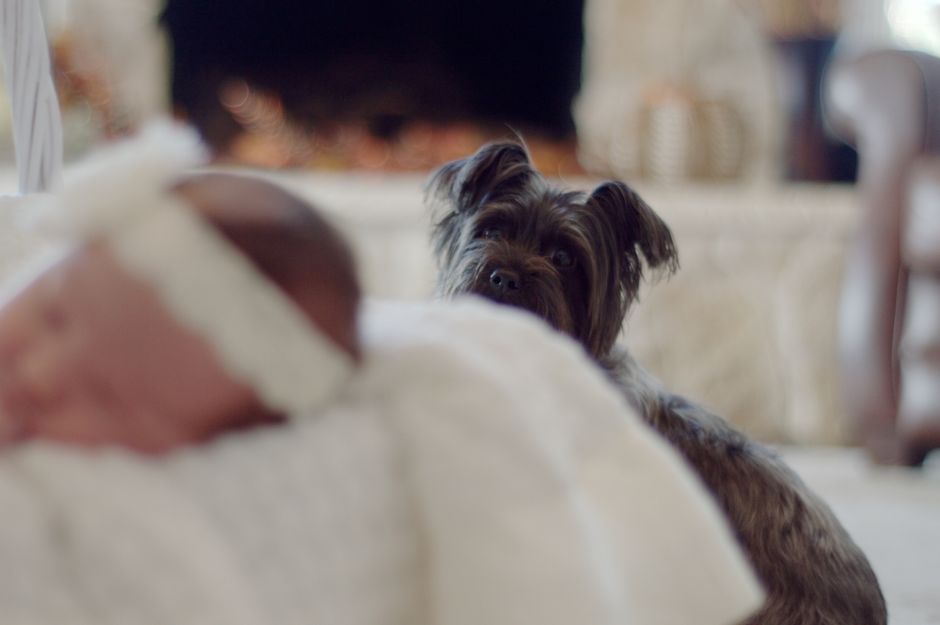
On the off chance that you resemble a
significant part of the populace, your four-legged companion is your first
"infant." Many individuals stress unnecessarily over how their canine
will deal with an infant in their life. Numerous proprietors consider disposing
of the family pets due to fears that they will hurt the infant. Kindly don't do
this unless there is no other alternative. Most pooches, when treated and
prepared appropriately, can deal with existence with an infant exceptionally
well.
Youngsters and pets make awesome
partners when raised legitimately together and instructed how to carry on with
each other. Kids that experience childhood in a home with pets learn regard and
love for creatures, and all the more significantly, regard forever. As the kids
develop more established they can learn duty by watching over the creatures.
Creatures advance our and our youngsters' lives bizarre.
Having an infant can cause issues for
the two people and puppies, as the puppy has a tendency to be dealt with in an
unexpected way, and along these lines, may act in an unexpected way. A few
proprietors child the puppy all the more, making the pooch wind up ruined and
difficult to deal with. Different proprietors get over-pushed and rebuff the
canine for ordinary, inquisitive conduct toward the infant. Regularly our pets
are the focal point of our reality, our "infants" on the off chance
that you would, and can get "envious" if not prepared to deal with
losing that status to the new infant. On the off chance that you will endeavor
to set up your pets for the fresh introduction, everybody can live in
agreement.
Infrequently the puppies end up
overprotective of the infant. Numerous proprietors appreciate and very much
want the pooch being a watch for the child. While it is typical for the canine
to wind up defensive of the infant, it is risky for the puppy to end up
overprotective and not let anybody close to the child. The greater part of the
above situations can prompt the pooch being kicked out of the house!
As you are influencing arrangements to
convey home to infant, you have to set up your dog(s) for the same ahead of
time if conceivable. While most mutts will be extremely delicate with the
child, numerous puppies don't consider children to be people in light of their
size, scent, and the interesting clamors they make. By setting aside the
opportunity to give your pooch some additional adoration and consideration he
ought to be fine and not swing to awful conduct to stand out enough to be
noticed. You have to plan and instruct your pooch for what lies ahead. This
will guarantee that they are prepared and willing to acknowledge the new
relative with open and adoring paws.
Utilizing quieting cures (herbs,
fragrance based treatment, oils) as well as physician recommended solutions are
additionally an alternative to help encourage a superior carried on canine. You
can converse with your veterinarian to ask about these items and the
suggestions related with their utilization. I am an adherent to the comprehensive
approach at whatever point conceivable, rather than utilizing drugs.
It would be ideal if you please
dependably know that your pooch is a creature and creatures can chomp or do
damage to an infant, purposefully or inadvertently. Regardless of how all around
carried on or adoring your pooch is NEVER LEAVE YOUR DOG ALONE WITH YOUR BABY!
I feel compelled to pressure this as much as possible. Mishaps can happen. You
would prefer not to hurt your child or need to dispose of your puppy in view of
a tragic, and conceivably avoidable, occurrence.
In the event that you are uncertain that
your puppy will acknowledge your new child, please look for the guidance of an
expert coach or behaviorist before settling on any choices.
Trust it or not, your conduct with, and
toward your pooch matters. It can represent the deciding moment your pooch's
acknowledgment of and regard for your infant. On the off chance that you
demonstration like a pioneer, you will be dealt with like a pioneer. You need
your puppy to regard each person in your family, including your child. You
should educate your pooch regard for the child. This will make life simpler for
every one of those included.
Be firm but fair-
Do not let your dog
depart with things, however do not be a drill sergeant either! try and build
any corrections as mild as doable, however confirm they're effective. try and
have a good time together with your dog and also the coaching - you each got to
get pleasure from it or neither one can wish to continue!
Your manner of speaking issues
Try not to YELL at your pooch! Pass on
the significance of the order through the manner of speaking - coordinate your
voice to what you are telling your puppy. Summons ought to be short and brief,
in a low, nearly snarling voice. Your voice ought not get higher as you give
the summon. Try not to sing to your puppy or ask the canine an inquiry! You
won't find the solution you need! When giving recognition, seem like you would
not joke about this! It ought to be the inverse of a summon - higher pitched
and energetic. On the off chance that your canine gets excessively energized
when you adulate him, tone it down a bit and talk delicately. Your pooch will
in any case comprehend that he is completing a great job, yet he will be less
inclined to hop around and be insane.
Be quiet and decisive
Our puppies sustain off of our energies
and feelings. This influences their practices and responses. On the off chance
that we are casual and sure, our puppies will feel the same, and realize that
we are LEADING them, and they don't need to lead us.
Utilize a container
In the event that your canine does not
as of now utilize a container, right now is an ideal opportunity to begin. A
carton isn't barbarous, it can really be a superb and safe place for your
pooch. Keeping your pooch at specific circumstances, for example, for rest or
times when you can't manage, is the same than putting your infant in its
lodging for the same. It is in reality simple to instruct your puppy to
acknowledge being in the box. A great many people surmise that a canine who has
not utilized a box before will experience considerable difficulties, however
that isn't typically valid. My two more established pooches began utilizing the
box when they were 7 and 8 years of age, about the time my child began
slithering and investigating alone. This enabled me to realize that both my kid
and my canines were protected and nothing terrible could happen. Your kid can
be harmed by your pooch as simple as your kid could hurt your canine. The issue
lies in the way that if the canine makes even the smallest risk to your child
or even unintentionally harms your infant, it is your pooch's blame. It isn't
reasonable for the puppy for something to that effect to happen in light of the
fact that you were not overseeing the two together constantly!
Dispose of awful conduct
Awful behavior can't be acknowledged as
they can be hazardous to another infant and another mother. Bouncing and
nipping are practices that should be halted immediately. Taking and harsh play
likewise should be stopped from the beginning promptly.
Educate your pooch how to be quiet and
delicate, by adulating and treating this conduct.
Working summons into regular day to day
existence and play makes listening simple and typical for your puppy. It winds
up normal to the canine and it is more improbable that your puppy will be
crazy. It is additionally bravo as well, as it ensures that you are preparing
your canine regular, making you the pioneer - not the supporter.
Exercise is key for good conduct
As I expressed before in the guide,
practice is basic for your pooch. This guarantees your pooch will be better
acted on the grounds that it doesn't have the vitality to act mischievously!
Customary strolls are critical. On the off chance that you don't have room
schedule-wise to stroll for miles, utilizing a doggie rucksack can influence a
short stroll to appear like a long stroll for your canine. A puppy rucksack
instantly puts your pooch into work mode, which will tire her mind. On the off
chance that you uniformly adjust some weight on each side, for example, water
bottles, it will advance the measure of physical vitality that is exhausted by
your canine. Instructing your canine to walk pleasantly by the stroller is
likewise essential. It is exceptionally troublesome and hazardous to have a
puppy hauling and crazy while attempting to move a stroller. In the event that
you intend to utilize a child transporter, sling, knapsack or auto situate your
puppy needs to carry on the rope and stroll with you, not pull you. It is a
smart thought to hone with the gear before child comes (utilize a doll set up
of the infant) so you can work out any wrinkles or issues.
Have consistent dutifulness sessions
with your puppy so she doesn't overlook her charges and recalls that she needs
to tune in constantly. This likewise tires her mind! Attempt to work the orders
into regular day to day existence so it turns out to be second nature to
her.
Is your canine permitted on your
furniture?-
On the off chance that your puppy is as
of now permitted on the furniture you might need to rethink this as your infant
will probably be on the furniture a considerable measure. Pooch hair and earth
can disturb your child. You likewise would prefer not to need to always tidy up
after the puppy. Your puppy could likewise unintentionally harm the child
hopping up on the furniture or repositioning himself. It's best to limit access
to the furniture with the goal that issues don't happen.
Time-out for your canine
Make certain you give your puppy time
far from the child to settle. Time outs are a compelling apparatus to enable
your canine to keep its rational soundness and furthermore for when they are
accomplishing something incorrectly.
Your new calendar and your puppy
The time has come to straighten out the
canine's calendar to familiarize her with the up and coming changes.
Contemplate the time you will have for the pooch for things, for example,
strolls, encouraging, potty breaks, play and consideration. Attempt to keep the
timetable predictable for your canine so she doesn't feel pointless worry from
the progressions that are going on before your child arrives. Having as meager
disturbances as conceivable will achieve this objective. Once your pooch feels
secure and is utilized to the new standard, attempt to begin having slight
varieties in your every day happenings. At the point when your infant arrives
things don't generally go as arranged. You can have each goal of remaining on
plan and unavoidably something will change that calendar! Children don't take
after timetables! Do attempt to remain on plan, when conceivable, with the goal
that your puppy is permitted some similarity of a schedule. Canines feel
security when the guidelines and schedules remain the same.
Give careful consideration to your
puppy
It is presently time to instruct the pooch
to expect less consideration from you in one sitting. Once the child arrives
you won't have a similar measure of value time to go through with your puppy,
yet it is as yet fundamental to set aside a few minutes for your pooch.
Calendar standard 5 to 10 minute sessions every day where you give careful
consideration to your pooch. You can do things, for example, play, prepping,
petting or simply converse with your pooch. This enables your pooch to
comprehend that he is as yet a critical piece of your life. You have to educate
the canine that this time might be with or without the child. This is
additionally a decent time for you to unwind and loosen up as pets are
extremely restorative. Know that on the off chance that you have in excess of
one pet, each will require singular consideration if conceivable. You can
likewise give the pack the consideration in the meantime, giving they get
along, or enable them to play together to consume vitality.
Your puppy should be quiet and
adjusted
You have to ensure that your puppy is
quiet and adjusted before infant comes into the house. It is vital for your
pooch to figure out how to be quiet with the goal that he doesn't hurt you or
the infant. Your puppy should be adjusted so he doesn't pressure unnecessarily
and carry on improperly. In the event that your canine isn't quiet and adjusted
there are approaches to enable you to achieve this. Preparing and exercise are
great spots to begin to accomplish a quiet and adjusted puppy. On the off
chance that these don't work your canine may have a major issue with him, for
example, a psychological or physical issue. Counsel with your vet and nearby
canine behaviorist or mentor. They ought to have the capacity to guide you the
correct way. They can help instruct you with respect to the course you should
take, regardless of whether conduct alteration, drug, or comprehensive
cures.
Is your canine delicate?-
Educating your pooch how to be delicate is
critical with the goal that he won't unintentionally hurt the child. Numerous
puppies utilize their teeth excessively and should be educated the best
possible approach to utilize their mouths - without the teeth!
Does your canine hop?-
On the off chance that your canine is a
jumper, educating legitimate welcome will check this issue. It is fundamental
that your canine can see individuals without bouncing or getting excessively
energized. At the point when the child returns home there will most likely be
bunches of individuals going by and he should be on his best conduct. It
likewise encourages the correct, delicate conduct your canine ought to have
around the child.
In what manner will my pooch handle the infant
being unpleasant with her?-
Instructing your pooch what to physically
anticipate from your infant is critical so she can adapt to and comprehend what
to do when infant pulls, hits or pushes her. Newborn children and kids are not
really delicate by nature, and must be instructed how to be so. Your canine
likewise needs to figure out how to manage these practices from his little
pioneers. Begin to delicately deal with your canine in a rougher manner while
commending great conduct and tenderly, if conceivable, amending improper
conduct, for example, nipping or mouthing. Kids tend to pet generally, pull
ears and tails, put their hands in the puppy's face and touch delicate zones on
the canine. You have to emulate these practices keeping in mind the end goal to
educate your pooch what's in store and how to manage it fittingly. Make it a
day by day propensity to have time on the floor with your canine touching all
aspects of his body in a cherishing style. This is great since it enables the
canine to acknowledge touch in territories that it may not need touched. It
additionally instructs the pooch to be delicate while on the floor and to be
docile to you and your child. Do this gradually and your pooch will get
it
Acquiescence preparing your pooch
Your pooch should be submission prepared
and have essential behavior. I recommend that you select in an instructional
course on the off chance that you can. Check your nearby preparing clubs, or
offices, for classes and make a point to watch a class so you can perceive how
they prepare. Ensure that you are alright with their systems and the teachers.
In the event that you are not permitted to watch a class, please look somewhere
else. Coaches who are honest to goodness ought to have no issue with this and urge
you to do as such.
Here are some commands and basic actions
that your dog should be able to do to listen and be under control:
Walk well with a strap
seat
Down
stay
Leave it alone
DO NOT
Understand the limits
silent
Attention / Look
Let it fall
Go to your place / place
Teaching the dog to respond to manual
cues will also be beneficial. It is less likely that a sleeping baby will wake
up if he does not speak.
It is also a good idea to teach your dog
to accept a leash, inside and outside the house. This ensures that you have
control over your dog and tends to help the dog behave better. Most cities and
towns have laws on the leash, so it is imperative that your dog get used to the
leash. You should also walk your dog every day. This gives your dog mental
stimulation, as well as physical exercise, which helps to tire them out, which
makes them less likely to get into trouble and a better dog to behave in
general.
Spot, Go To Your Spot!-
The command "Go to your point"
is an excellent order to have in your arsenal a dog with good behavior. You can
use this exercise to allow your dog to be with you and not under your feet, or
keep your dog away and always know where it is and what it is doing. He teaches
his dog to lie on a rug or blanket and stay until they release him.
Extended stays are important in general,
whether or not they are "in one place" because they help you maintain
control of your dog. Due to the fact that your dog has to work for you, it
facilitates a relationship in which you are dominant (responsible character or
alpha) in your mind and that of your dog.
Teach your dog what he
can chew on-
All dogs chew. Everyone has a specific
reason and they have a physical need to chew. They need to chew to exercise
their jaws and also to release pent-up frustrations. Excessive chewing can also
be a breed trait. To avoid problems, do not control.
Soiling in the house-
If your dog has an accident in the
house, or is not equipped, you must clean it properly to avoid other
"accidents" or to comment on the same areas and to maintain a
sanitary environment. Dog feces can contain parasites and other unwanted diseases.
Giardia, E-Coli, other worms and parasites are sometimes present in feces and
many are transferable to humans.
Use high-value treats-
Use high-value treats:
treat your dog's tastes and do not normally receive them when it comes to new
visions, sounds and children's smells. This tells your dog that these are good
things, and that he should love them and associate them with rewards, instead
of feeling malice or fear for them. Be sure to keep special treats and use them
only to familiarize your puppy with what the new baby will be.
The health and
cleanliness of your dog is vital-
It is essential that your dog is in good
health and clean before taking your baby home. Take your dog to the vet for a
checkup to make sure he has no health problems as they can cause unwanted
behavior on your dog that will interfere with your life with your baby. Make
sure you are up to date in all aspects, or that your degree levels are good,
and that you do not have worms.
The next thing you need to make sure is
that you bathe your dog or prepare it BEFORE the baby gets home. If your dog is
throwing, it is a good idea to start a load removal program, such as regular
preparation and the addition of a product like Linatone (which you can buy at
your local pet store, online or in some hairdressers). ). combination of oils
to help the skin and hair. Be careful not to bathe your dog too much as this
can cause skin problems in many dogs. Make sure you do not have fleas or ticks,
as it is not healthy and can expose your baby to health problems. This also
creates problems because you will not have much time to bathe once the baby is
there. The use of special medicines against fleas and ticks will help ensure
that it remains free of fleas and ticks.
Begin by teaching your dog to accept its
paws and rubbing its body when it comes from outside will help reduce the
amount of dirt that remains in the house. It also reduces the risk of your dog
having something that could cause an allergic reaction to you or your baby
Also, be sure to vacuum or sweep
regularly since the dog's hair quickly accumulates. This is especially
important when your baby begins to crawl or be on the floor a lot, unless, of
course, you want the baby to be a human Swiffer.
Carry a doll-
The idea of carrying a
doll (preferably the one that cries) may seem stupid, but it is a very good way
to accustom your dog to an addition to the family. Everything is different with
a baby. Holding a baby changes your posture and your manners, so your dog
should feel comfortable and accept that. The dog must also follow orders and be
obedient when you have the baby or the baby is away from home. Using a doll
while practicing daily commands will help your dog respond better when the baby
arrives. Take the dog for a walk, play with the dog and all the normal things
he does with his dog with and without the baby equipment and the doll.
Baby sounds-
Making your dog use the
sounds of a baby is also a good idea. This allows your dog to become familiar
with strange noises that you may not have heard before, so it's no surprise
when the baby comes home. Things like crying, gurgling, screaming / shouting
and babbling are not necessarily normal for a dog to hear. There are many CDs
and tapes that you can buy for this purpose. Start with a low volume and expose
your dog for short periods early. Gradually increase the volume and playing
time of the sounds. Try to read the recording every day until the baby arrives.
Real babies and
children-
Another good idea is to
expose your dog to the real thing: real babies and children. If you have
friends or family members who have babies, you can ask if they allow your dog
to listen to them or even record them. You can visit places like parks, if your
dog is wise, so that your dog can hear all the noises that children make. Be
sure to start away from your home so that your dog does not feel threatened in
its own territory. The next step is to expose your dog in your garden and then
in your home. Make it a gradual process so that your dog can accept it slowly.
Baby smells-
The smells of a baby
are often unknown to a dog. Gradually begin to accustom your dog to these new
smells by using the products you will use with your baby, such as baby oil,
powders, baby products and diapers. Putting these products in baby blankets and
baby clothes will also help. If you have friends or relatives with babies, ask
them to borrow used and unwashed blankets and rattan fabrics so that the dog
gets used to the real smells of a baby.
The Nursery-
The nursery configuration allows your
dog to become familiar with the changes in the house. It allows your dog to
feel comfortable with the images and sounds associated with the baby's
equipment, thus preventing jolts when the baby arrives.
If you do not want your puppy to be in
the nursery, you should start restricting access now. Keeping the door closed
or a baby door at the door helps achieve this goal. Your dog will not feel left
out or anxious to stop being allowed in this room. Another good idea is to put
a dog bed outside the nursery so that your dog is always close to you, but not
in the room. You will not feel left out, but you will feel more included. Spend
time in the room without your dog so that you understand that it will be normal
and that it is no longer your territory. As you begin to understand that the
room is no longer yours, you will accept it and be less likely to try to enter
when the baby comes home. It also helps keep the room clean and free of dog
hair and dirt. You will have more than enough to clean in the children's room
as it is!
If you plan to allow your dog at daycare
begin teaching appropriate behaviors as soon as possible. Teach her to be calm
there and not to jump on furniture and baby equipment. It is also a good idea
to teach her to go to daycare so that she is allowed to be with you and the
baby, but she is out of the way and behaves well. You can also have a bed or
mat that your dog can ask for (remove it when you and the dog are not in the
room). When the baby begins to crawl and move, you can limit the time the dog
spends and never leave it alone with the dog.
Baby's things are
off-limits-
Make sure you constantly reinforce that
baby's things are not dog's things. Even if you have practiced this before the
baby comes home, dogs need reminders.
It is important to get rid of dirty
diapers to make sure your dog does not catch them. Dogs like things that
contain human waste, such as dirty diapers and feminine products. Keep these
products out of reach, as they will make a terrible mess and are very unhealthy
for your dog to eat. They have chemicals that are not good for your dog and can
cause blockages. In addition, the consumption of human waste can also make your
dog sick (and breathe disgusted!).
Teach your dog to leave baby blankets
alone and not to put or step on them. Place them on furniture and on the floor
to show your dog that they are off limits. If your dog is trying to walk or lie
on them, use a firm "NO" and redirect your dog to a suitable place
and ask him to lie down. When your dog avoids them on his own, congratulate him
on his good behavior with a treat or hug, and he will understand that these
items are not something to approach. You want to prevent your dog from getting
hurt when your baby is lying down or hiding under blankets (as babies often
do!).
Teach your dog which
toys belong to him-
It is recommended to teach your dog
which toys are his and what toys are before the baby arrives so there are no
problems afterwards. It is also a good idea because you can buy toys similar to
those your baby will have and do not worry about using the real toys for these
exercises. An easy way to do this is to use peanut butter (or something like
cream cheese or cheese spread) and bitter apple (you can buy it online or at
pet stores). Put a sour apple on baby toys and peanut butter on dog toys.
Before giving your dog the choice of toys he wants, take a small bitter apple
on his finger and clean it in his dog's mouth. This will help your dog
immediately identify the unpleasant taste in baby toys. If it does not, the
bitter apple is often diluted and the dog will be able to obtain the baby's
toys because the taste is bearable. Make sure you have treats ready to reward
your dog when he chooses his toys instead of the baby ones. Put on the dog's
leash and you're ready to start. Place the "marked" toys on the floor
and let your dog decide which toys he prefers. If you are still trying to pick
up the baby's toys, say "no, leave it" and, if necessary, move it
with the strap in an energetic movement. Do not try to hurt the dog, just make
a quick correction by repeating "No, leave it". When your dog
"leaves" baby toys, rent and treat. You can also teach the dog the
concepts of "mine," "baby," and "yours" by adding
these phrases to workouts. When the dog looks for its toys, it can say:
"Well, when the dog goes for the baby's toys, say:" No, leave it,
baby. "You can use the same principle as the one used for the baby's toys.
the dog chooses something that belongs to him by substituting "Mine"
instead of "Baby".
Remember that if you let your baby's
toys hang, your dog will probably try to steal them. The temptation is too big
for her and will probably fail. Do not put it at bay! Try to get toys for dogs
that do not look like the baby's, without stuffed animals or bumps. There are
many good toys for dogs that are very different from baby toys. Finally, keep
only some of the dog's toys at a time. This will prevent you from falling prey
to the syndrome of "everything within my reach is mine!" If you understand
that the three toys in the field are yours, you will be less inclined to take
things that you should not do.
No comments:
Post a Comment